


Advancing a More Inclusive Plastic Waste Value Chain in Bangladesh (PDF 568.1 KB)
Unilever Bangladesh is supporting safer, more resilient livelihoods for waste workers while advancing circularity.
Unilever GlobalChange location


Respect for human rights is embedded in our Code of Business Principles (PDF 1.41 MB) and in our Responsible Partner Policy (PDF 4.45 MB) and an important part of doing business with Unilever.
In 2011, we publicly endorsed the United Nations Guiding Principles on Business and Human Rights (UNGPs) and in 2015 published the first standalone human rights report (PDF 4.53 MB) using the United Nations Guiding Principles Reporting Framework. Since then, we’ve continued to develop our approach to address our potential and actual impacts in line with the evolving business and human rights landscape.
Our human rights strategy is grounded in the principles of effective human rights due diligence (PDF 1.89 MB), with clear governance processes for delivery of our strategy.
We have identified our salient human rights issues, defined by the UNGPs as “the human rights that are at risk of the most severe negative impacts through a company’s activities or business relationships”. This helps us prioritise how we address human rights impacts across our operations and value chain.
Our strategy seeks to embed respect for human rights within our own business and our value chain. See below to find out more about our approach to each:
Our human rights reporting is aligned with the UNGP reporting framework (PDF 252.66 KB). As part of our commitment to the UNGPs, we disclose progress of our work to address our salient human rights issues in our Annual Report and Accounts (PDF 6.16 MB) and our annual UK Modern Slavery Statement.
We have also developed an impact measurement framework to assess the effectiveness of our human rights due diligence approach including areas for improvement.
Further examples of our actions can be found in the case studies below:
Unilever Bangladesh is supporting safer, more resilient livelihoods for waste workers while advancing circularity.

Through AIM-Progress, Unilever is supporting suppliers to better identify and manage human rights risks. Training has reached more than 170 suppliers across four markets.
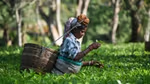
Violence against women and girls, whether at home or at work, is a fundamental violation of human rights. It undermines dignity, equality and safety, values no society or business can ignore. To more deeply understand the impact of gender-based violence in the Assam tea industry, we joined with partners to commission a study.
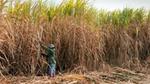
Unilever is working to strengthen respect for human rights in Thailand’s sugarcane supply chain through risk assessment, corrective action planning, policy advocacy and industry collaboration – with an aim to improve recruitment practices and improve working conditions.

Unilever aims to strengthen respect for human rights in its palm oil supply chain through due diligence, supplier support, smallholder empowerment and industry collaboration.

We’re collaborating with implementation partners to support our business partners strengthen their human rights due diligence through worker-led surveys and management maturity assessments. Insights from workers are informing action plans to address issues including harassment, discrimination and unsafe working conditions.

Unilever’s Responsible Sourcing Programme verifies that suppliers meet our Responsible Partner Policy requirements through the use of self-declaration, due diligence scanning, online assessments and independent verification by third party audits in high-risk sites.
Through these types of measures, this programme aims to strengthen suppliers’ policies and practices that uphold respect for the rights of workers and support suppliers in consistently meeting our standards for responsible sourcing and respect for human rights.

Unilever’s rightsholder engagement guidance supports inclusive, trust-based engagement, helping teams identify, prioritise and engage rightsholders. It is at the core of our approach to human rights due diligence.

We explore technology solutions and experiment with new approaches that may help in tackling human rights issues. We piloted a new prototype over a 5-month period that aimed to create a more systematic and automated way to identify and classify potential impacts.

We’re committed to paying a fair wage to all direct employees, which we achieved across our own operations in 2020. This commitment has been independently recognised through accreditation by the Fair Wage Network in 2021 and again in 2024.
We are now working with suppliers to commit to paying a Living Wage through the Living Wage Promise. Our goal is to ensure that suppliers representing 50% of Unilever’s global procurement spend sign the Living Wage Promise by 2026.

Collaboration is essential to drive industry change. We are working with the Palm Oil Collaboration Group to simplify human rights due diligence management systems in the palm sector and identify areas for improvement.
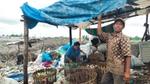
Unilever is a co-founder and member of the Fair Circularity Initiative, aiming to improve working conditions for waste pickers in a number of markets.

Engaging with workers helps us to improve our approach to detecting, preventing, and resolving human rights issues. We recently commissioned an independent review (PDF 94.85 KB) of a supplier recruitment fee remediation process which included extensive engagement with migrant workers to understand their experiences and highlight areas for improvement.

Unilever participates in several multistakeholder platforms that seek to address discrimination and harassment in key commodity supply chains. This includes the Women’s Safety Accelerator Fund (WSAF), an initiative focused on supporting efforts to improve workplace safety for women in our tea supply chain.
Unilever employees and Non-Executive Directors are expected to understand the Code of Business Principles and Code Policies (PDF 1.41 MB), which includes respect for human rights, and how these apply to their work. We conduct annual mandatory training on our Code of Business Principles and Code Policies for all office-based employees and provide tailored training for employees working in factories and more remote areas. We continuously review and develop training resources to help employees understand their own rights and the rights of others, as well as their responsibility to respect human rights in their work.
Have you got a few minutes to complete a survey? We would love to hear about your experience using Unilever.com.